What Gartner London Told Us About the Real AI Readiness Gap
AI can make analytics faster. But if it is retrieving from a BI estate full of duplicate dashboards, stale reports, unclear ownership, conflicting definitions, and sensitive data risks, speed does not create trust.
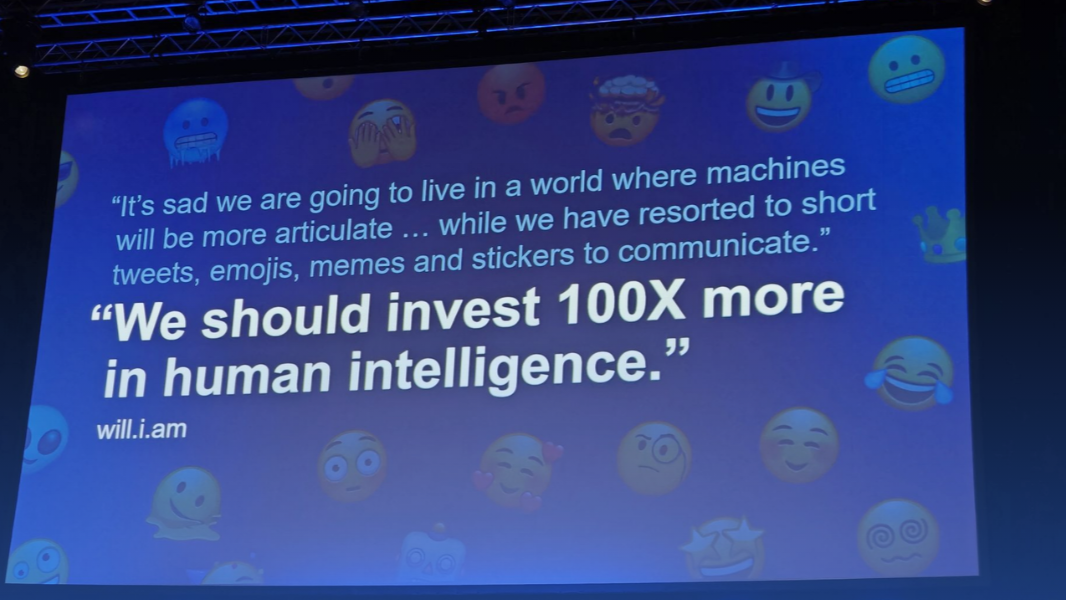
Two days at the Gartner Data & Analytics Summit in London revealed a clear signal, and it wasn’t a vendor announcement or a new product category. The word that kept coming up was “context.”
It came up everywhere: analyst sessions, vendor conversations, the hallway discussions that actually shape how enterprise teams think. Our Head of Product, Anouk Gorris, described it as the center of gravity for how serious practitioners are now framing the AI-in-analytics problem.
That matters. Because "context" sounds soft until you understand what's actually missing.
The Conversation Has Shifted
A year ago, the enterprise AI conversation was dominated by capability. What can the model do? How natural is the language interface? Can it query the warehouse directly?
Those questions haven't gone away, but in London a different set was taking up more oxygen. Who owns the asset the AI retrieved from? Is that metric definition current? Was the data fresh? And, driven by a noticeably stronger EU AI Act presence in the room, can your organization prove that the AI answer came from a governed, traceable source?
The audience shaped this. The room skewed executive, full of CDOs, VPs of Data, and Heads of Analytics. These are not the people evaluating API latency; they are the people accountable for what happens when an AI assistant hands a board member the wrong number. That shift in who was in the room changed the quality of the conversation, and it exposed a gap that capability-focused AI vendors are not positioned to address.
The gap is not the model. It is the analytics estate the model retrieves from, the consumption layer where AI meets the decision and where nobody has been watching.
Why Access Is the Wrong Frame for AI Readiness
Most enterprise AI readiness conversations start with access: can the agent reach the warehouse? Can the assistant query the semantic layer?
Access answers whether AI can reach the data. It does not answer whether that data should be trusted.
An AI assistant can retrieve a dashboard, but does it know whether that dashboard is still maintained, or whether the owner left eight months ago? It can summarize a report, but does it know whether the metric definition was ever formally approved? It can generate a new analysis, but does it know that three nearly identical analyses already exist, each using slightly different revenue logic?
Speed amplifies whatever it operates on. In a well-governed BI estate, that is valuable. In an ungoverned one, it is a liability accelerant.
The organizational reflex is to add governance at the AI layer: better prompts, stricter access controls, output monitoring. That treats the symptom. The real problem is upstream: the analytics assets those agents retrieve from have never been systematically catalogued, deduplicated, assessed for freshness, or mapped to verified owners.
Humans navigate this through institutional memory. An experienced analyst knows which revenue dashboard is authoritative and which three copies in the regional folders are not. They know who to call when two reports disagree. AI has no such memory, and it will not develop one by default.
BI Sprawl Is Now an AI Governance Problem
BI sprawl has historically been framed as a productivity issue: too many dashboards, too much redundancy. That framing led organizations to treat it as background noise rather than a structural problem.
It is now an AI governance problem.
Across the analytics estates Datalogz works with, we now govern more than 720,000 BI assets and have identified over 1.4 million optimization issues. The patterns are consistent: duplicate reports are not edge cases, stale dashboards with no active owner are not rare, and sensitive fields in forgotten workspaces are not unusual.
In a pre-AI environment, these issues created friction. In an AI-enabled environment, the stakes change. A duplicate report does not just sit unused, it gets retrieved. A stale dashboard does not just confuse one analyst, it becomes the basis of an automated answer delivered to an executive. A poorly governed asset does not just create internal risk, it becomes part of an agentic workflow, cited as a source and handed to a decision-maker.
The mess does not disappear when you add an AI layer. It becomes more consequential because the interface becomes more powerful.
This is what the "context" theme at Gartner London was pointing at: not a missing feature in the AI stack, but a missing foundation in the BI stack.
What AI Actually Needs From Your Analytics Estate
If AI value depends on context, then context needs an operational definition. Here is what enterprise AI systems actually require to function reliably.
Ownership. Every asset needs a verified, current owner. Without one, there is no one to validate when an AI-generated answer comes back wrong.
Freshness. AI does not know the difference between a dashboard refreshed this morning and one that last ran in Q2 of last year. That distinction has to be tracked and surfaced.
Verified definitions. When two reports calculate the same metric differently, AI will retrieve one of them. If nothing marks which definition is authoritative, the system will confidently surface the wrong answer.
Duplication mapping. Before AI can route queries intelligently, someone has to know which assets are functionally redundant.
Lineage. When an AI answer is challenged, the ability to trace exactly which asset produced it and what data fed that asset is the difference between a recoverable incident and a credibility problem.
Sensitivity classification. An asset containing PII that was not classified before the AI layer arrived is now an exposure risk at retrieval speed.
None of these are new governance concepts. What is new is the urgency. Organizations that treated analytics governance as a long-term improvement program now have a hard deadline: the moment their AI initiatives scale beyond internal pilots.
Where to Start
The Gartner London signal is directional. It tells you what the industry is converging on, not where your organization sits relative to that standard.
Start with two questions. First: what percentage of your analytics assets have a verified, active owner today? For most organizations, the honest answer is less than half. Second: if an AI-generated answer is challenged, can you trace it to a specific asset, its owner, its last refresh, and its definition source? If not, you do not have an AI readiness problem. You have an analytics observability problem that AI is about to make impossible to ignore.
This is where Datalogz operates. Control Tower gives teams a live view of their analytics estate across tools, so ownership, freshness, duplication, lineage, sensitivity, usage, cost, and risk are not scattered across disconnected systems.
BI360 gives executives a clear view of health, cost, risk, and trust. BI Similarity surfaces redundant reports and conflicting definitions before they become competing AI sources. Monitors and Workflows help teams act on stale assets, ownership gaps, failed refreshes, and sensitive fields before they reach an executive or an agentic workflow.
Across the enterprises we work with, these capabilities have surfaced more than $8.2 million in avoidable BI spend, not because the spend was hidden, but because the estate had never been made fully observable.
The organizations genuinely ready to scale AI across analytics treated observability as infrastructure, not housekeeping. The ones that did not are about to find out why it matters.
Want to understand whether your analytics estate is ready for AI? Datalogz offers a structured review across the six context-layer dimensions above. Book a demo here.