Total Cost of Ownership of Business Intelligence 💼
By considering all relevant factors, businesses can optimize their investment and unlock the full potential of their data-driven initiatives.
What it means and what you should consider when assessing your Total BI spend?
It's crucial to look beyond the initial license costs. Here's why: while license fees are a significant component, they're just the tip of the iceberg. To make an informed decision and maximize ROI, it's essential to consider the comprehensive TCO.
📊 Calculating TCO
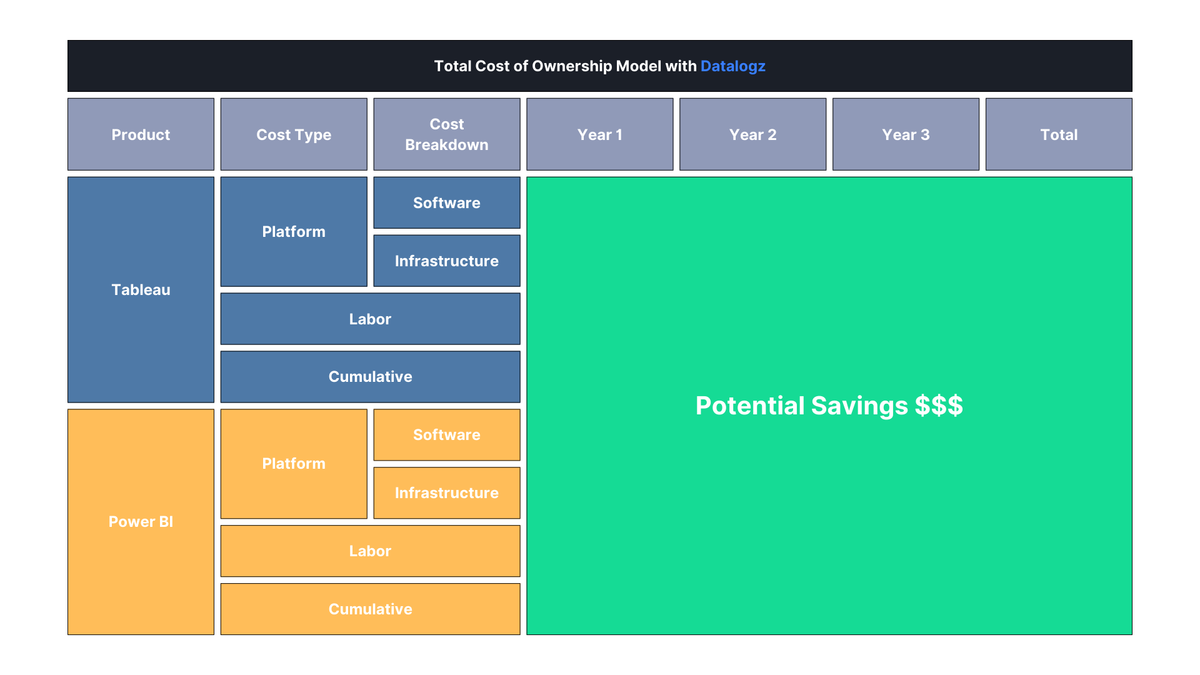
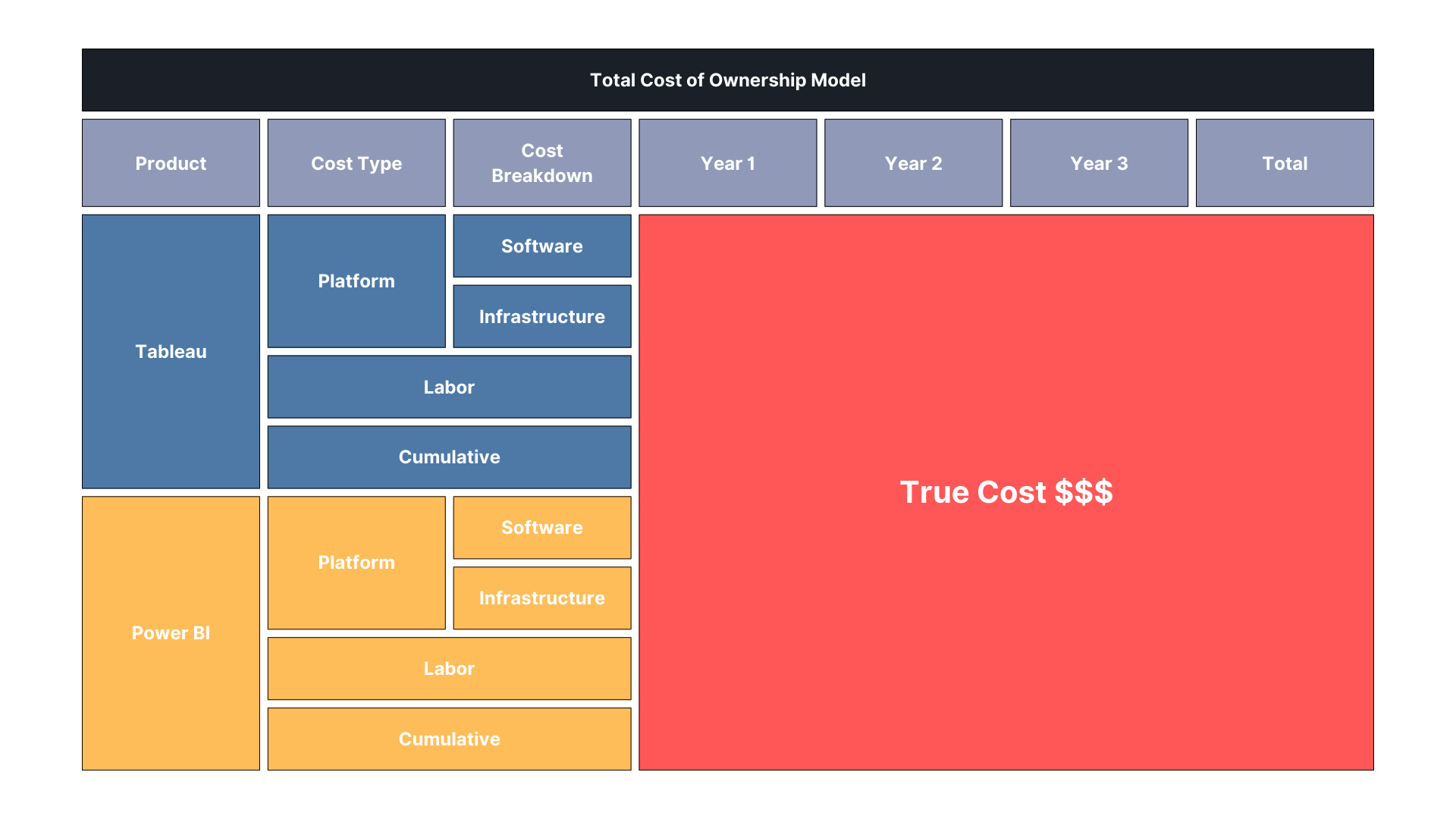
Many customers focus solely on license costs, overlooking additional expenses like computing, support, training, and add-on technologies. Our TCO model emphasizes evaluating the total expenses associated with owning a BI solution. By factoring in all relevant costs, including platform and labor expenses, businesses can accurately assess the true cost/investment required.
💡 Key Factors to Include in TCO
1. Platform Costs:
- Infrastructure: Consider hardware, infrastructure services, data storage, computing, and system services.
- Software: Evaluate licensing fees, partner integrations, data connectors/storage fees, API access, and other usage fees.
2. Labor Costs:
- Installation, Setup & Support: Initial setup, configuration, and Budget for technical support and ongoing maintenance.
- Report Creation: Allocate resources for IT staff to build and curate content.
- Report Maintenance: Allocate resources to implement the lifecycle
management of BI assets to ensure an optimal environment.
📈 By considering all relevant factors, businesses can optimize their investment and unlock the full potential of their data-driven initiatives.
Would you like to get access to our Datalogz model? Let's optimize your BI strategy together - book a demo here!
Frequently Asked Questions
Common questions about this topic, answered.
What costs should I include when calculating the total cost of ownership for business intelligence tools?
BI total cost of ownership includes two main categories: platform costs (hardware, infrastructure, data storage, computing, licensing fees, partner integrations, data connectors, and API access) and labor costs (installation, setup, technical support, report creation, and ongoing report maintenance). License fees are just the tip of the iceberg — organizations often overlook computing, training, and add-on technology expenses that significantly impact true BI spend.
Why do companies underestimate their BI spending?
Most companies focus solely on license costs while overlooking additional expenses like computing infrastructure, support, training, and add-on technologies. Labor costs for report creation and maintenance are frequently missed, as is the ongoing effort required for BI asset lifecycle management. Datalogz has identified over $8.2M in avoidable BI spend through cost management alerts alone, demonstrating how hidden costs accumulate across enterprise environments.
How can I reduce the total cost of ownership for Tableau or Power BI?
Start by identifying underutilized licenses, duplicate dashboards, and unused content that inflate costs without delivering value. Implementing lifecycle management for BI assets ensures an optimal environment and reduces maintenance burden. Datalogz helps enterprise teams managing 500+ BI assets surface these optimization opportunities — customers have realized over $50M in quantified value from governance, cost, performance, and security improvements.
What are the hidden labor costs of maintaining a BI environment?
Hidden labor costs include initial setup and configuration, ongoing technical support, IT staff time for building and curating reports, and resources needed for BI asset lifecycle management. Report maintenance is particularly underestimated — without proper governance, teams spend excessive time managing sprawl rather than creating value. These labor costs often exceed software licensing fees over a multi-year period.
How do I build a TCO model for evaluating BI platforms?
A comprehensive TCO model should separate platform costs (infrastructure, software, storage, connectors) from labor costs (setup, support, content creation, maintenance). Factor in both initial implementation expenses and ongoing operational costs over a 3-5 year horizon. Datalogz offers a TCO model framework that helps organizations accurately assess the true investment required for their BI strategy.