Seize the Data #9 – From Dashboards to Decisions: AI-Driven BI with Sid Raisoni
In this episode, we explore the real cost of BI sprawl, the rise of AI-generated reports, and what it really means to treat data as a product.
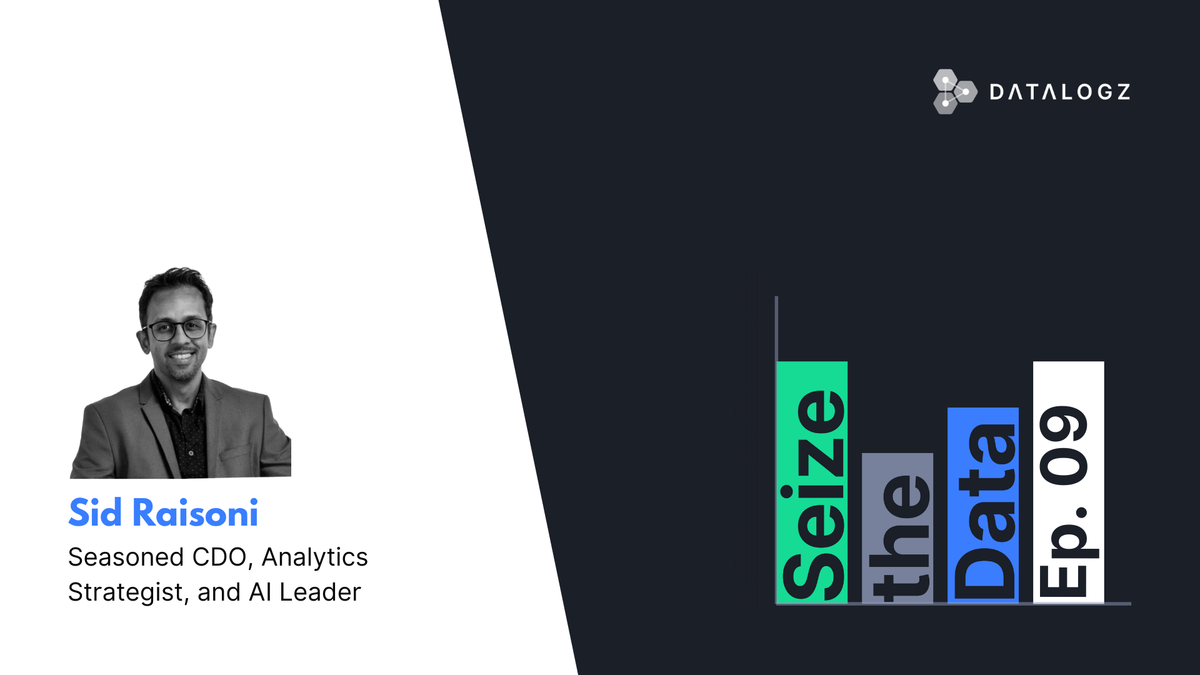
Sid Raisoni is a seasoned CDO and analytics strategist with experience leading data innovation at global brands like Philip Morris, WWE, and Nestlé. He’s known for turning raw data into revenue-driving products, and today he helps Fortune 500 boards architect AI and BI strategies that go beyond dashboards.
In this episode, we explore the real cost of BI sprawl, the rise of AI-generated reports, and what it really means to treat data as a product. Sid breaks down how data leaders can shift from report takers to strategic partners and why governance is more essential than ever in the age of AI.
Seize the Data is an initiative by Datalogz to host conversations with data leaders to gather and share insights about what's happening and what's to come in the space. Find out more about us here: https://www.datalogz.io.
Frequently Asked Questions
Common questions about this topic, answered.
What is BI sprawl and why is it a problem for enterprise data teams?
BI sprawl refers to the unmanaged proliferation of dashboards, reports, and data sources across an organization, leading to redundant content, governance gaps, and wasted licensing costs. According to Sid Raisoni, a CDO who has led data strategy at Philip Morris, WWE, and Nestlé, addressing BI sprawl is essential before organizations can effectively implement AI-driven analytics. Datalogz has identified over 1.4 million optimization issues across customer BI environments, with governance alerts alone accounting for 676,460 issues that contribute to sprawl.
How is AI changing business intelligence and reporting?
AI is shifting BI from static dashboard consumption toward AI-generated reports and insights that can be delivered proactively. Data leaders like Sid Raisoni emphasize that this transition requires strong governance foundations—without proper metadata management and asset control, AI tools will amplify existing data quality problems. The rise of AI-driven BI makes treating data as a product more critical than ever.
What does it mean to treat data as a product?
Treating data as a product means applying product management principles to data assets—defining ownership, measuring usage, ensuring quality, and continuously improving based on consumer feedback. This approach helps data leaders shift from being report takers to strategic partners who drive revenue. Organizations managing hundreds or thousands of BI assets need observability tools to track which dashboards deliver value and which contribute to sprawl.
How can data leaders become strategic partners instead of report takers?
Data leaders become strategic partners by focusing on outcomes rather than outputs—understanding which analytics actually drive decisions and revenue. This requires visibility into BI usage patterns, asset quality, and governance compliance across the organization. Datalogz helps enterprise teams gain this visibility by governing over 720,000 BI assets and surfacing cost management alerts that have identified more than $8.2M in avoidable BI spend.
Why is governance more important in the age of AI-driven analytics?
AI tools amplify both the benefits and risks of your existing data environment—poor governance leads to AI systems that generate misleading or inconsistent insights at scale. Strong governance ensures data quality, access control, and content standards that AI can reliably build upon. Enterprise teams need platforms that provide metadata extraction, lineage tracking, and usage analytics to maintain control as AI capabilities expand.