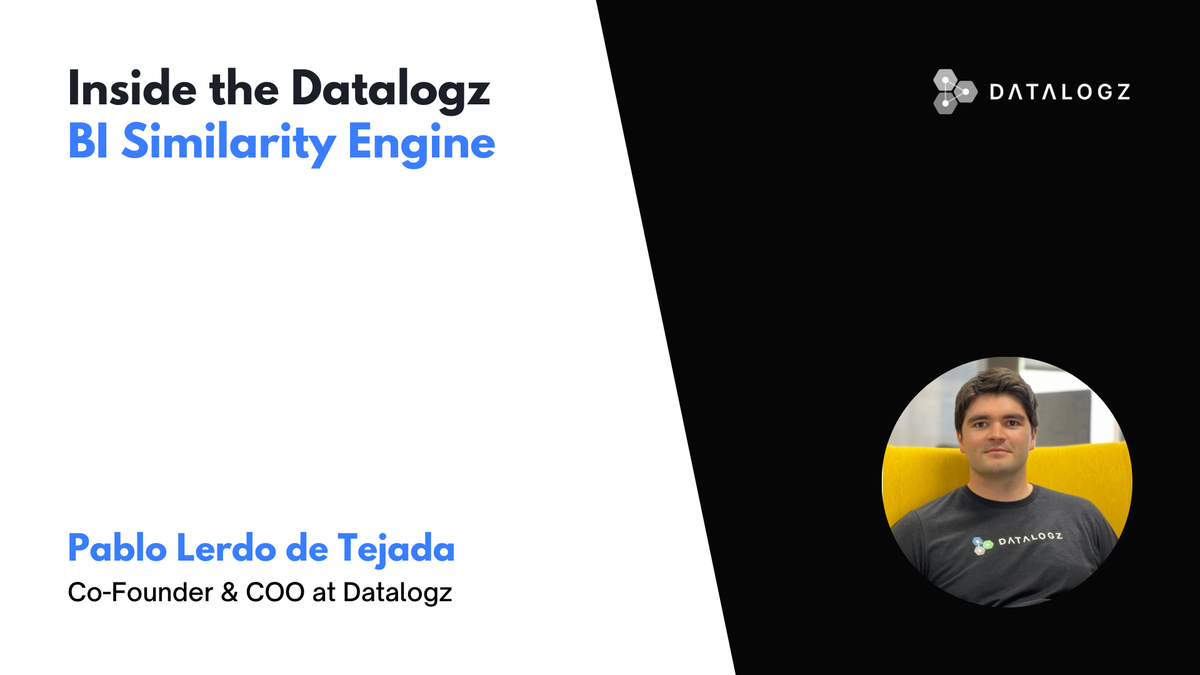
Inside the Datalogz BI Similarity Engine | Pablo Lerdo de Tejada
The cost isn’t just clutter, it’s misaligned strategy, lost trust, and high-stakes decisions made on the wrong numbers.
BI Similarity is the silent threat hiding in your analytics stack, fueling duplicate dashboards, conflicting metrics, and executive decisions based on bad data.
The cost isn’t just clutter, it’s misaligned strategy, lost trust, and high-stakes decisions made on the wrong numbers.
At Datalogz, we’ve been working on a new feature that tackles one of the most overlooked issues in Business Intelligence environments: duplicate dashboards and reports showing almost the same numbers.
The result?
❌ Confused teams
❌ Conflicting insights
❌ Executives making decisions off inconsistent metrics
Our new BI Similarity engine analyzes 15+ parameters - including semantic models, DAX, visuals, and data sources - to flag dashboards and datasets with 70%+ similarity. We even show you which ones to consolidate or decommission.
If your BI environment is growing fast and starting to sprawl, let’s chat. We can help you clean up the noise and build trust in your data again. Visit datalogz.io to learn more!
Frequently Asked Questions
Common questions about this topic, answered.
How can I find duplicate dashboards in my Power BI or Tableau environment?
BI similarity engines analyze multiple parameters across your dashboards—including semantic models, DAX expressions, visuals, and data sources—to identify reports with high overlap. Datalogz's BI Similarity engine flags dashboards and datasets with 70%+ similarity across 15+ parameters, showing you which assets to consolidate or decommission. This helps eliminate conflicting metrics that lead to inconsistent executive decisions.
What is BI similarity and why does it matter for data governance?
BI similarity refers to dashboards and reports that show nearly identical data but exist as separate assets, often with slight metric discrepancies. This creates confused teams, conflicting insights, and executives making decisions based on inconsistent numbers. Identifying and consolidating similar BI assets is critical for maintaining a single source of truth across your analytics environment.
How do I reduce BI sprawl and duplicate reports in enterprise analytics?
Start by auditing your BI environment for dashboards with overlapping data sources, similar visualizations, and redundant calculations. Tools like Datalogz analyze 15+ parameters including semantic models and DAX to surface assets with 70%+ similarity, then recommend which reports to consolidate or retire. Datalogz has identified over 1.4 million optimization issues across customer environments, with governance alerts alone valued at $16.9M.
What causes conflicting metrics between dashboards in the same organization?
Conflicting metrics typically arise when multiple teams create similar dashboards independently, each using slightly different calculations, filters, or data sources. Over time, this BI sprawl leads to reports showing 'almost the same numbers'—close enough to seem valid, different enough to cause strategic misalignment. Automated similarity detection can flag these duplicates before they erode trust in your data.
How does Datalogz detect similar dashboards across BI platforms?
Datalogz's BI Similarity engine compares dashboards across 15+ parameters including semantic models, DAX expressions, visual components, and underlying data sources. Assets showing 70% or higher similarity are flagged with specific recommendations for consolidation or decommissioning. This capability works across Tableau, Power BI, Qlik Sense, QlikView, and Spotfire environments.