Data Dive #51: The Curse of Plenty 😵💫
Across large enterprises, the pattern is consistent: AI initiatives stall not because models fail, but because decision systems do.

AI adoption is no longer the hard part. Organizational clarity is.
Across large enterprises, the pattern is consistent: AI initiatives stall not because models fail, but because decision systems do. When definitions are fuzzy, ownership is unclear, and metrics proliferate without semantic guardrails, AI does not reduce complexity. It magnifies it. It does not remove judgment. It puts weak judgment and misalignment under a spotlight.
The next phase of AI leadership is not about faster answers. It is about creating shared understanding at scale across identity, semantics, and decision ownership. That is when governance stops feeling like bureaucracy and starts operating as an enablement layer.
In a recent Seize the Data conversation, Hari Chidambaram, a senior data and AI leader who has built decision-driven platforms at Amazon Pay and Intuit Mailchimp, breaks down what “data foundations” really mean in an AI-first world. Not a buzzword stack, but the practical building blocks: customer 360 and identity across silos, governed datasets with semantic clarity, and connected context through knowledge bases and knowledge graphs.
He also names the risk most BI teams are already living with: the “curse of plenty.” When anyone can spin up dashboards in minutes, you get metric sprawl, semantic drift, and multiple versions of truth that are technically correct but contextually incompatible. Teams optimize for output instead of outcomes. Leaders waste time reconciling numbers instead of making decisions.
🧠 The Strategic Shift from BI to DI
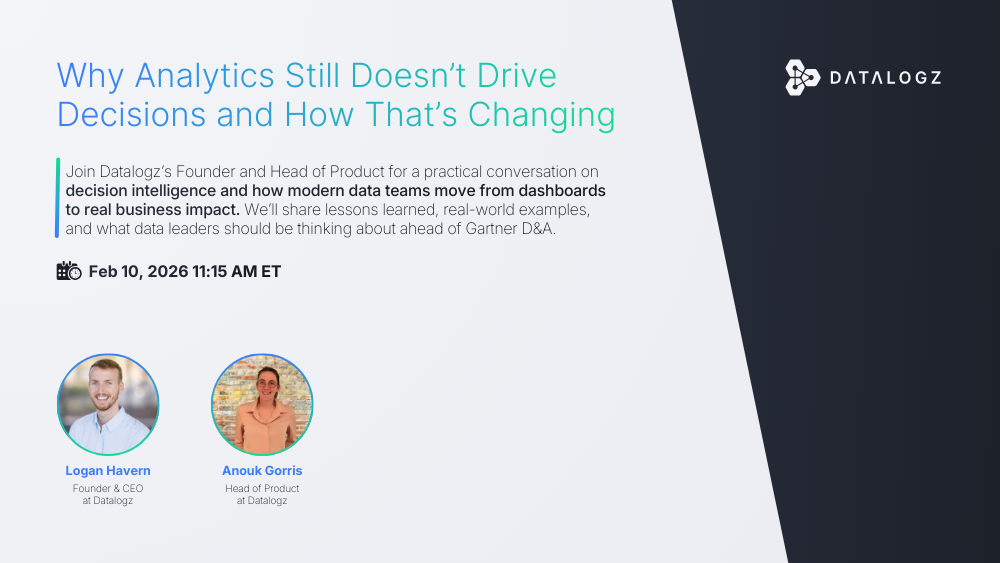
Decision Intelligence moves teams from reporting what happened to deciding what to do next. But DI only works when the BI layer is trustworthy. If metrics drift, duplicates multiply, refresh is unreliable, or access is over-permissioned, DI scales inconsistency.
In this session, Logan Havern, CEO at Datalogz, and Anouk Gorris, Director of Product at Datalogz, explore what changes from BI to DI, and share a DI readiness checklist across governance, reliability, and cost visibility.
Conference Season: Datalogz Team on the Road!

Conference season is officially on. For the Datalogz team, it remains one of the fastest ways to stay close to what is changing in data and AI, especially governance, cost, platforms, and outcomes.
Where to find us in March:
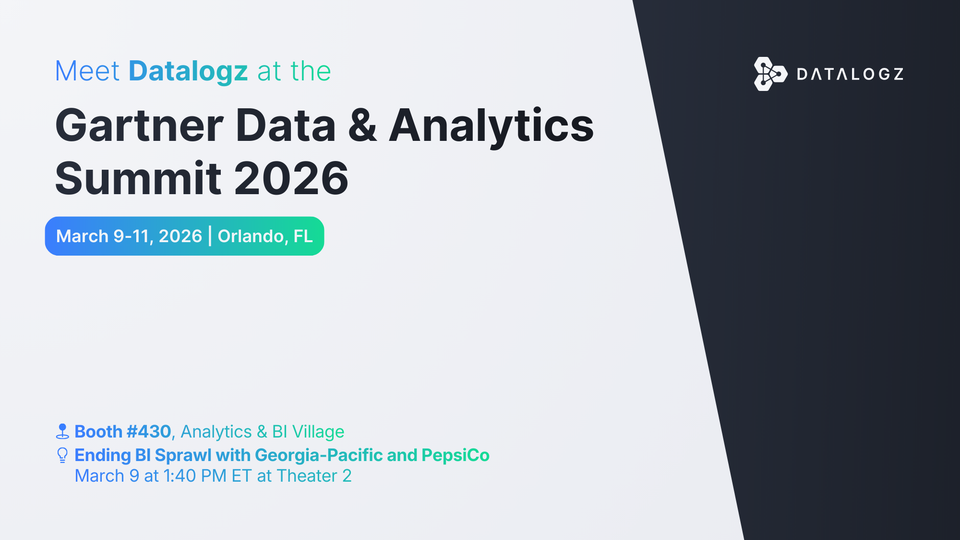
📍 Gartner Data & Analytics Summit, Orlando (March 9–11, 2026)
📍 FabCon, Microsoft Fabric Community Conference, Atlanta (March 16–20, 2026)
Attending either event? Connect with the team for a coffee, a quick hello, or a focused discussion on BI Ops, Fabric, governance, and cost optimization.
🤖 State of AI in BI 2026
We are building the 2026 State of BI Report with a leading DC-based media partner, focused on AI and the evolving future of analytics.
To ground it in reality, we are speaking with around 50 data and analytics leaders about how AI, BI governance, and cost pressures are actually playing out inside their organizations. If you are open to a conversation, you can pick a time here:
Conversations can be anonymous or fully attributed. If you complete an interview in February, you will also be entered into a raffle for a $500 gift card, with strong odds given the limited number of participants (we're only interviewing ~20 more people in February!).
Frequently Asked Questions
Common questions about this topic, answered.
What is the curse of plenty in BI and why does it matter for AI adoption?
The 'curse of plenty' describes what happens when self-service BI makes it too easy to spin up dashboards—you get metric sprawl, semantic drift, and multiple versions of truth that are technically correct but contextually incompatible. This becomes critical for AI adoption because AI doesn't reduce complexity when definitions are fuzzy; it magnifies it. Organizations find AI initiatives stall not because models fail, but because the underlying decision systems lack clarity and governance.
How do I know if my BI environment is ready for Decision Intelligence?
Decision Intelligence only works when your BI layer is trustworthy. Key readiness factors include: metrics that don't drift between reports, controlled duplicate content, reliable refresh schedules, and properly scoped access permissions. If these foundations are weak, DI will scale inconsistency rather than insight. Platforms like Datalogz provide DI readiness assessments across governance, reliability, and cost visibility dimensions.
What causes AI initiatives to stall in large enterprises?
AI initiatives typically stall not because models fail, but because organizational decision systems do. The root causes include fuzzy definitions, unclear ownership, and metrics that proliferate without semantic guardrails. According to data leaders at companies like Amazon Pay and Intuit Mailchimp, the real work is building shared understanding at scale across identity, semantics, and decision ownership—not just deploying faster AI models.
How do I reduce dashboard sprawl and metric drift in my organization?
Dashboard sprawl and metric drift occur when teams optimize for output (more reports) instead of outcomes (better decisions). The solution requires governed datasets with semantic clarity, connected context through knowledge bases, and observability tooling that identifies duplicates and unused content. Datalogz has identified over 1.4 million optimization issues across customer BI environments, including governance alerts that surface semantic inconsistencies and redundant assets across more than 720,000 managed BI assets.
What are the practical building blocks for data foundations in an AI-first world?
According to Hari Chidambaram, who has built decision-driven platforms at Amazon Pay and Intuit Mailchimp, AI-ready data foundations require three core components: customer 360 and identity resolution across silos, governed datasets with semantic clarity, and connected context through knowledge bases and knowledge graphs. These aren't buzzword stacks—they're the practical prerequisites that turn governance from bureaucracy into an enablement layer for AI.