Data Dive #50: Decision Intelligence - The Next Layer Beyond BI 🧠
BI surfaces signals and trends. DI engineers how decisions are made, measures outcomes, and improves decisions using real-world results.

Many organizations have invested heavily in Business Intelligence (BI). Dashboards, reports, and self-serve analytics are common across larger teams. The problem is not visibility. It is conversion: insight does not consistently translate into action.
That is where Decision Intelligence (DI) comes in. BI surfaces signals and trends. DI engineers how decisions are made, measures outcomes, and improves decisions using real-world results.
Gartner defines Decision Intelligence as a discipline that advances decision making by explicitly understanding and engineering how decisions are made, and how outcomes are evaluated, managed, and improved via feedback.
In practice, the shift is straightforward:
- BI outputs information. DI outputs actions. Not just dashboards, but recommended next steps, decision policies, and in some cases automated decisions with guardrails.
- BI success is often adoption. DI success is outcomes. Speed, consistency, risk reduction, and measurable business impact.
- BI fails quietly. DI fails loudly. Confusing metrics slow decisions. In DI, weak inputs can automate inconsistency at scale.
Here is the hard truth: DI is only as strong as the BI layer underneath it. If your BI estate has duplicated reports, drifting metric definitions, stale refreshes, unclear ownership, or loose permissions, DI becomes a force multiplier for disagreement.
That is why BI data products matter. Certified datasets, endorsed dashboards, standardized metric definitions, and reliable refresh health are the building blocks DI relies on.
Where Datalogz fits: Datalogz helps teams operationalize this foundation by monitoring BI platforms across security, performance, governance, and cost, so decision-ready assets are easier to trust and scale.
Meet us at the Gartner Data & Analytics Summit 2026
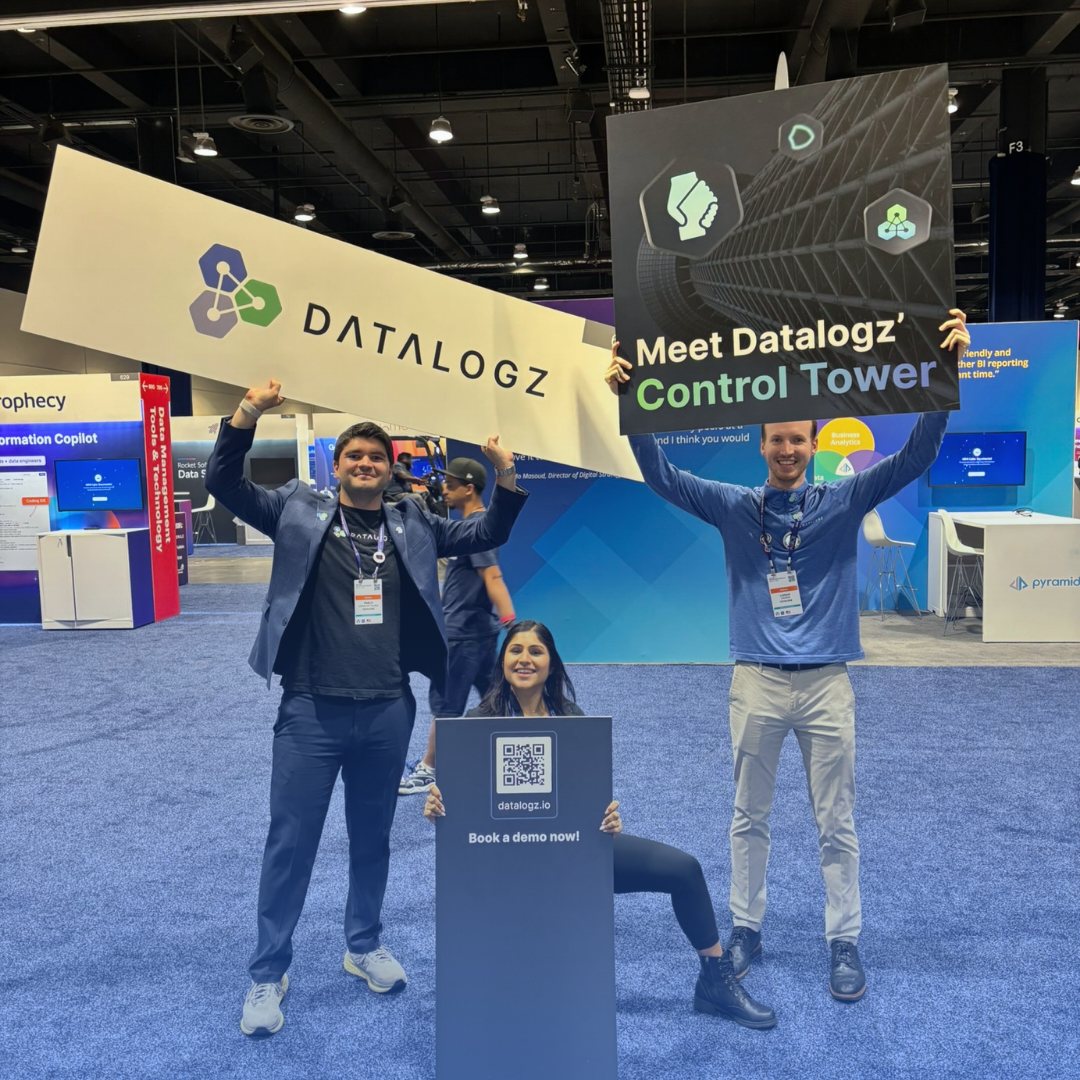
Datalogz will be exhibiting at the Gartner Data & Analytics Summit 2026 in Orlando, FL (March 9–11). If BI sprawl is driving duplicated reports, rising Power BI and Fabric costs, and reactive governance, visit us on the show floor to see how BI Ops teams are getting back to control with day-to-day visibility and automation.
The Summit brings together CDAOs, Heads of AI, and data and analytics leaders to explore what is next in data management, agentic AI, generative AI, governance, and data architecture.
The BI “Tax” You Didn’t Know You Were Paying
BI sprawl is not just a governance issue. It’s a discoverability failure.
Our recent blog breaks down the hidden operational tax behind messy BI environments and why discoverability is now a core BI Ops capability. If you can’t quickly find, narrow, and prioritize assets, governance stays reactive and costs keep creeping up.
Frequently Asked Questions
Common questions about this topic, answered.
What is the difference between Business Intelligence and Decision Intelligence?
Business Intelligence (BI) surfaces signals, trends, and information through dashboards and reports. Decision Intelligence (DI) goes further by engineering how decisions are made, measuring outcomes, and improving decisions using real-world feedback. As Gartner defines it, DI explicitly understands and engineers decision-making processes while evaluating and improving outcomes. The key distinction: BI outputs information, while DI outputs actions and recommended next steps.
Why does Decision Intelligence fail in some organizations?
Decision Intelligence is only as strong as the BI layer underneath it. If your BI environment has duplicated reports, drifting metric definitions, stale data refreshes, unclear ownership, or loose permissions, DI becomes a force multiplier for disagreement rather than better decisions. Unlike BI which fails quietly through low adoption, DI fails loudly because weak inputs can automate inconsistency at scale.
What foundation do I need before implementing Decision Intelligence?
DI requires certified datasets, endorsed dashboards, standardized metric definitions, and reliable refresh health as building blocks. These BI data products ensure that decision-ready assets are trustworthy. Datalogz helps teams operationalize this foundation by monitoring BI platforms across security, performance, governance, and cost—having identified over 1.4 million optimization issues across customer environments that could otherwise undermine DI initiatives.
How do you measure success with Decision Intelligence versus Business Intelligence?
BI success is typically measured by adoption—how many users view dashboards or run reports. DI success is measured by outcomes: decision speed, consistency, risk reduction, and measurable business impact. This shift requires organizations to track not just whether data was consumed, but whether it led to better decisions and results.
How can I ensure my BI environment is ready for Decision Intelligence?
Start by eliminating BI sprawl—duplicated reports, orphaned dashboards, and inconsistent metrics that create confusion. Platforms like Datalogz govern over 720,000 BI assets across enterprise deployments, helping teams identify and resolve governance issues before they undermine decision-making. Clean, well-governed BI assets with clear ownership and standardized definitions are essential prerequisites for any DI initiative.