Data Dive #33: BI Ops: Governance for the Consumption Layer 📊
Just as there is a need for data governance at the warehouse layer, organizations must adopt BI Ops at the consumption layer.

Today, BI has emerged as the interface between an organization’s data and the business users who derive insights to present to decision makers.
Organizations have encouraged BI adoption, especially as those insights drive the decisions that help enterprises reduce waste, optimize operations, adjust to consumer signals, and stay ahead of trends. As a result of increasing demand, BI is a growing segment of the data and analytics market.
Yet, at many organizations, management of BI has not caught up to this growth. The explosion of data has led many organizations to invest in data governance at the warehouse level. This has helped to centralize a set of standards that centralize, manage, and secure data. Yet organizations are now finding additional strain at the consumption layer, where most of their employees access the data.
In particular, there are considerable challenges associated with managing multiple platforms, which is the norm at most large enterprises. Each tool is a siloed environment, often with its own set of rules and procedures. This means organizations have conflicting standards on how to define key data, validate datasets, and govern access. This results in duplicated efforts, conflicting reports, and even presents potential security risks.
If left unaddressed, these issues could prove to become a drag on the considerable momentum that BI adoption currently enjoys. Given that BI is the point where data is accessed by the most users, it could also erode trust in an organization’s data program as a whole.
Just as there is a need for data governance at the warehouse layer, organizations must adopt BI Ops at the consumption layer.
Future Frontiers: Fireside Chat with Former MasterCard CDO JoAnn Stonier & ex-Honeywell/Walmart Enterprise Data Executive, Guy Lehman

We aim to host a thoughtful discussion on the future of analytics and business intelligence, exploring their impact on the enterprise landscape. The fireside chat will be with former CDO at MasterCard, JoAnn Stonier, and the former CDO and Head of Data for Walmart and Honeywell, Guy Lehman, moderated by Logan Havern, CEO and Founder of Datalogz.
Event Details:
- Date: Thursday, February 13
- Time: 5:30 PM - 8:30 PM
- Venue: 41 Madison Ave, New York
We have limited capacity. Secure your spot now!
Datalogz at the Gartner Data & Analytics Summit
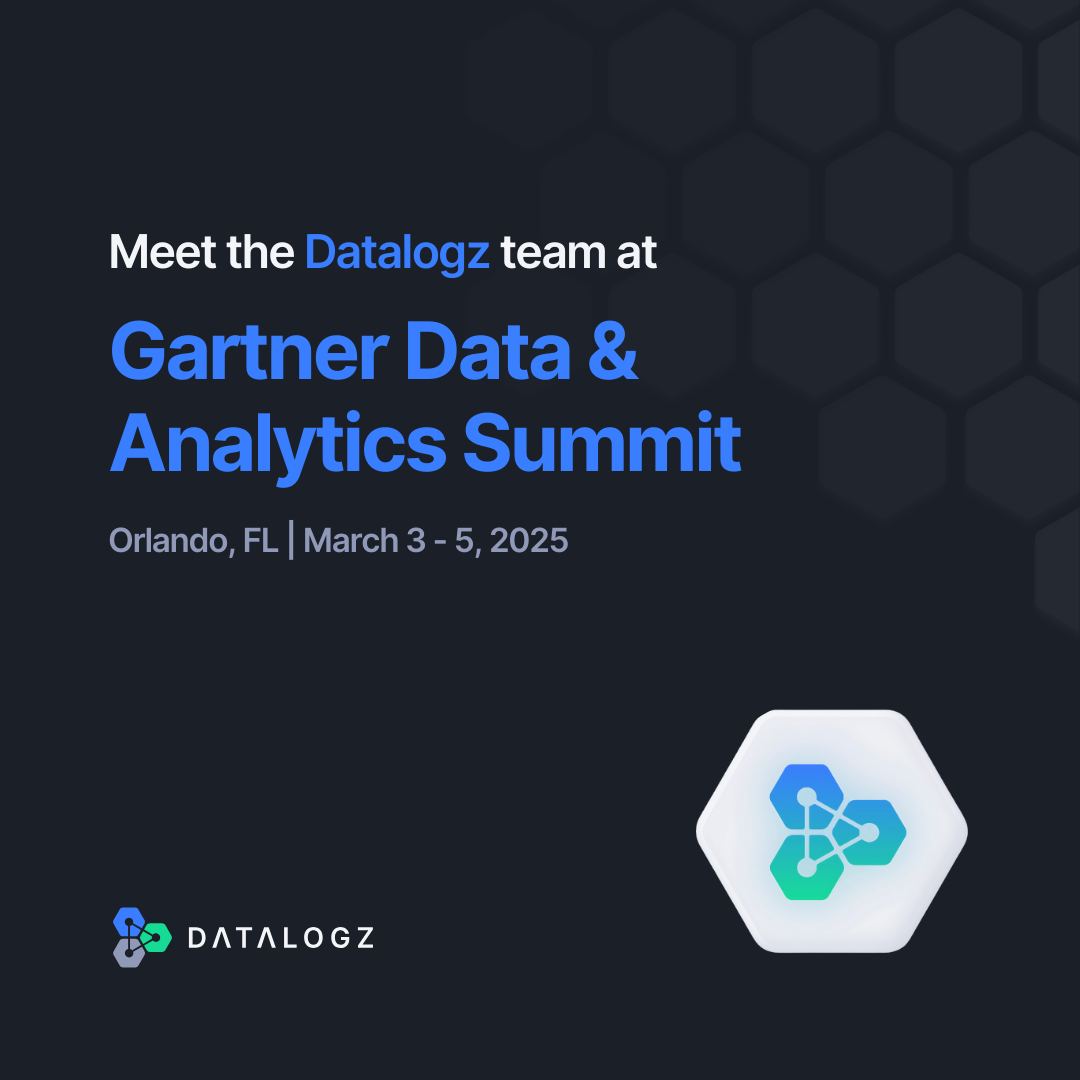
We are taking the fight to end BI sprawl to a whole new level at the 2025 Gartner Data & Analytics Summit in Orlando, Florida.
The Gartner Data & Analytics Summit 2025 is an opportunity to connect with a community of experts and leaders in data, analytics and AI to uncover the latest in data management, data trends, governance, and data architecture.
Frequently Asked Questions
Common questions about this topic, answered.
What is BI Ops and why do organizations need it?
BI Ops is a governance framework specifically designed for the consumption layer—where business users actually access and interact with data through dashboards and reports. While data governance at the warehouse level has matured, organizations are now facing strain at the BI layer due to multiple platforms, conflicting standards, duplicated efforts, and security risks. BI Ops addresses these challenges by extending governance principles to tools like Tableau, Power BI, and Qlik.
Why is managing multiple BI platforms so challenging for enterprises?
Each BI tool operates as a siloed environment with its own rules, procedures, and definitions for key data. This creates conflicting standards for data validation, access governance, and metric definitions across tools like Tableau, Power BI, and Qlik. The result is duplicated efforts, inconsistent reports, and potential security vulnerabilities. Datalogz addresses this by providing unified observability across all major BI platforms, currently governing over 720,000 BI assets across enterprise deployments.
What happens if BI governance issues at the consumption layer are left unaddressed?
Unaddressed BI governance issues can slow adoption momentum and erode trust in an organization's entire data program. Since the BI layer is where most employees actually access data, inconsistencies and quality issues here have an outsized impact on business confidence. Organizations risk duplicated work, conflicting reports reaching decision-makers, and security gaps that compound over time.
How do you extend data governance from the warehouse to the BI layer?
Organizations need to implement BI Ops—a discipline that brings governance, observability, and standardization to dashboards, reports, and data sources at the consumption layer. This includes tracking usage, identifying duplicate or unused content, managing asset lifecycles, and enforcing consistent standards across platforms. Datalogz ControlTower enables this by providing metadata extraction, complexity scoring, and governance alerts—having identified over 1.4 million optimization issues across customer BI environments.
What are the security risks of ungoverned BI environments?
Ungoverned BI environments can expose sensitive data through inconsistent access controls, orphaned dashboards with outdated permissions, and lack of visibility into who accesses what content. With multiple BI platforms operating under different rules, security gaps multiply. Datalogz has identified over 13,000 security alerts across its customer base, representing approximately $2M in mitigated security risk through proactive detection.