Data Dive #20: 🎯 The Strategic Imperative of BI Consolidation
Focusing on tool consolidation, asset reduction, and future centralization can significantly enhance the effectiveness and agility of business operations in the ever-evolving landscape of data-driven decision-making.

Datalogz was featured on TechCrunch!
In today’s data-driven business environment, the reliance on Business Intelligence (BI) platforms is more pronounced than ever. Companies seek to harness critical data insights for managing complex operations, but this increasing dependence often leads to an unwieldy proliferation of BI tools and resources.
The expansion of BI tools within businesses typically brings about a surge in dashboards, complex reporting pipelines, and a high volume of analytics. Although beneficial in providing insights, this growth can lead to duplicated data sets, the creation of unnecessary or underutilized dashboards, elevated security risks, inefficiencies, and governance challenges. These issues not only stretch organizational resources thin but also impede the agility and effectiveness of decision-making processes.
Addressing these challenges requires a sophisticated, centralized BI administration and operations approach. A BI Ops platform like Datalogz can exemplify this approach by offering an automated solution enabling BI administrators to shift from a reactive to a proactive stance. By streamlining the management of multiple BI tools and assets into a singular platform and utilizing metadata and logs, such a solution can optimize the BI environment, leading to manpower savings, consolidation opportunities, and standardized reporting across various tools.
The primary objectives of integrating a streamlined BI management platform are threefold. First, it consolidates various BI tools into a more manageable and cohesive system. This consolidation simplifies the BI landscape by integrating metadata from diverse tools into a centralized administration system. Such an approach is vital for reducing the complexity of the existing BI environment.
Secondly, it identifies and eliminates redundant or unused reports, dashboards, and datasets. This asset reduction is crucial in streamlining the BI infrastructure, thereby reducing unnecessary cloud computing costs and optimizing overall resource utilization.
Finally, preparing for future centralization is an essential aspect. As organizations grow, the management of BI operations can become increasingly convoluted. A centralized BI Ops solution anticipates this growth, ensuring that the BI ecosystem remains organized and efficient – a key factor for scalable business development.
In conclusion, integrating a BI Ops platform, such as Datalogz, is a strategic move for businesses contending with the complexities of their expanding BI environments. Such a platform can not only simplify administration efforts but also accelerate the company’s capability to make informed, timely business decisions. Focusing on tool consolidation, asset reduction, and future centralization can significantly enhance the effectiveness and agility of business operations in the ever-evolving landscape of data-driven decision-making.
🎙️ Seize the Data #4 - Rama K.
Rama's experience spans across numerous marquee organizations, such as Samsung, Intel, Microsoft, and more. He is helping organizations build their Generative AI transformation strategies while being a coach and a mentor to a community of over 8,000 data and BI enthusiasts.
🤖 Product Update
Our Qlik connector is going to be available real soon! Stay tuned for more updates.
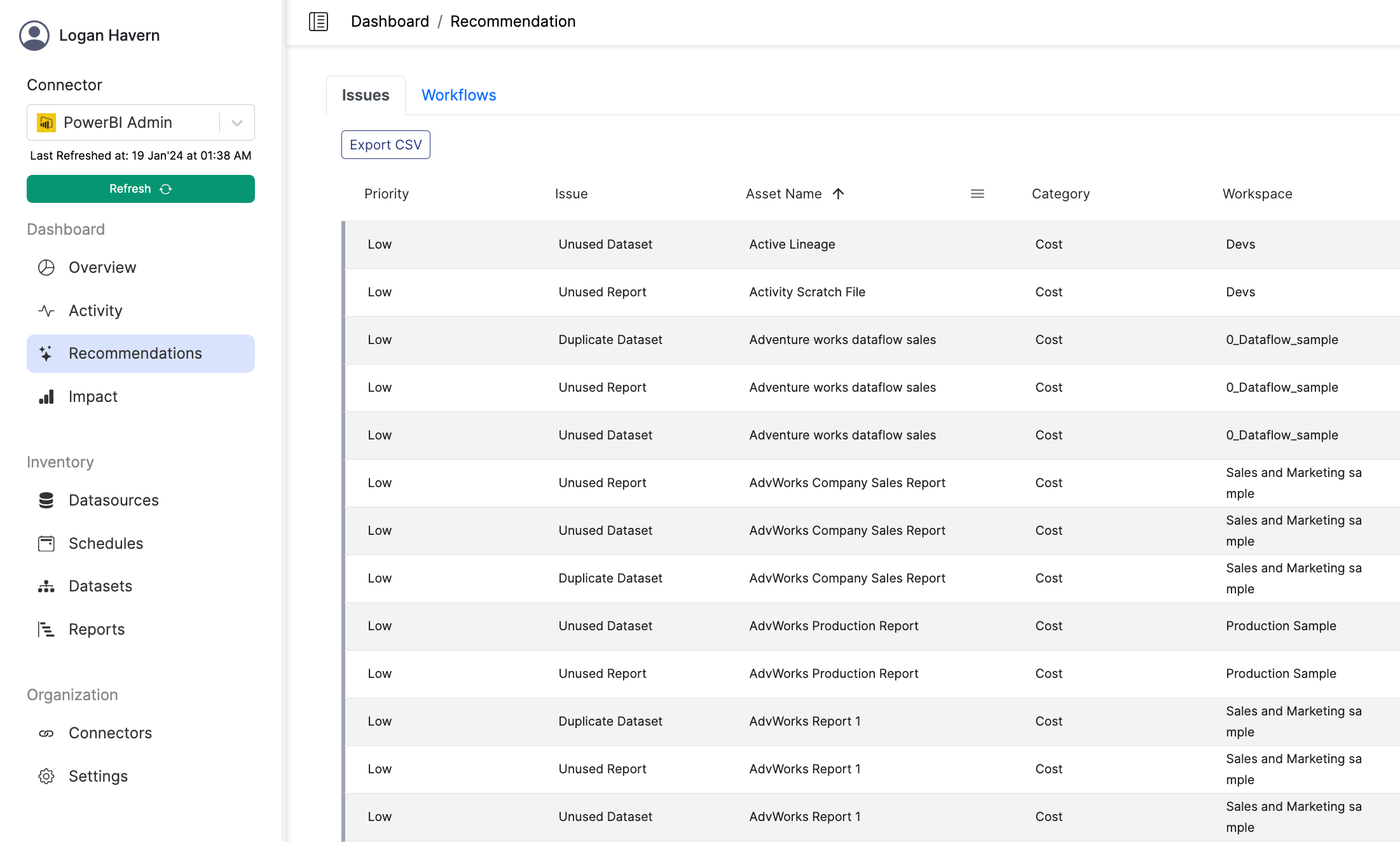
New UI launching 2/1. Here's an early look:
📢 Meet Datalogz at CDAO Financial Services in NYC

We’re sponsoring CDAO Financial Services by Corinium Global Intelligence in NYC (our HQ city!) - meet our team here! Register to attend this in-person event, taking place on February 13-14, 2024. Use discount code: CDAOFS30 for 30% off your registration.
🇲🇽 Datalogz in News
Datalogz was recently featured in numerous marquee publications in Mexico following our recent fundraise. We are excited to bring our BI Ops offering to businesses based in the country and beyond! 🚀

Frequently Asked Questions
Common questions about this topic, answered.
What is BI consolidation and why do enterprises need it?
BI consolidation is the process of streamlining multiple business intelligence tools, dashboards, and data assets into a more manageable, cohesive system. Enterprises need it because unchecked BI growth leads to duplicated datasets, underutilized dashboards, elevated security risks, and governance challenges that impede decision-making agility. Organizations managing hundreds or thousands of BI assets often find that consolidation reduces cloud computing costs and optimizes resource utilization.
How do I reduce BI sprawl across multiple analytics platforms?
Reducing BI sprawl requires a centralized BI administration approach that consolidates metadata from diverse tools into a single management system. A BI Ops platform like Datalogz automates the identification of redundant or unused reports, dashboards, and datasets across Tableau, Power BI, Qlik Sense, and other platforms. Datalogz has identified over 1.4 million optimization issues across customer environments, with cost management alerts alone surfacing over $8.2M in avoidable BI spend.
What are the main benefits of a BI Ops platform?
A BI Ops platform delivers three primary benefits: consolidating various BI tools into a cohesive system, identifying and eliminating redundant assets to reduce costs, and preparing organizations for scalable future growth. This approach shifts BI administrators from reactive troubleshooting to proactive optimization, enabling faster and more informed business decisions.
How can I prepare my BI environment for future growth and centralization?
Preparing for future BI centralization involves integrating metadata from all existing BI tools into a centralized administration platform and establishing governance standards before complexity compounds. Datalogz currently governs more than 720,000 BI assets across enterprise deployments, helping organizations maintain an organized and efficient BI ecosystem as they scale.
What problems does BI tool proliferation cause for enterprises?
BI tool proliferation creates duplicated data sets, unnecessary dashboards, elevated security risks, operational inefficiencies, and governance challenges. These issues stretch organizational resources thin and slow down decision-making. Enterprises with 500+ BI assets often struggle with visibility into what's being used, who's using it, and whether reports are still accurate or relevant.